- Monday - Saturday 9:00am To 9:00pm
- UAN : 03-111-077-111
- [email protected]

Pustular Psoriasis | Best Treatment For Psoriasis | Best Dermatologist
Pustular Psoriasis
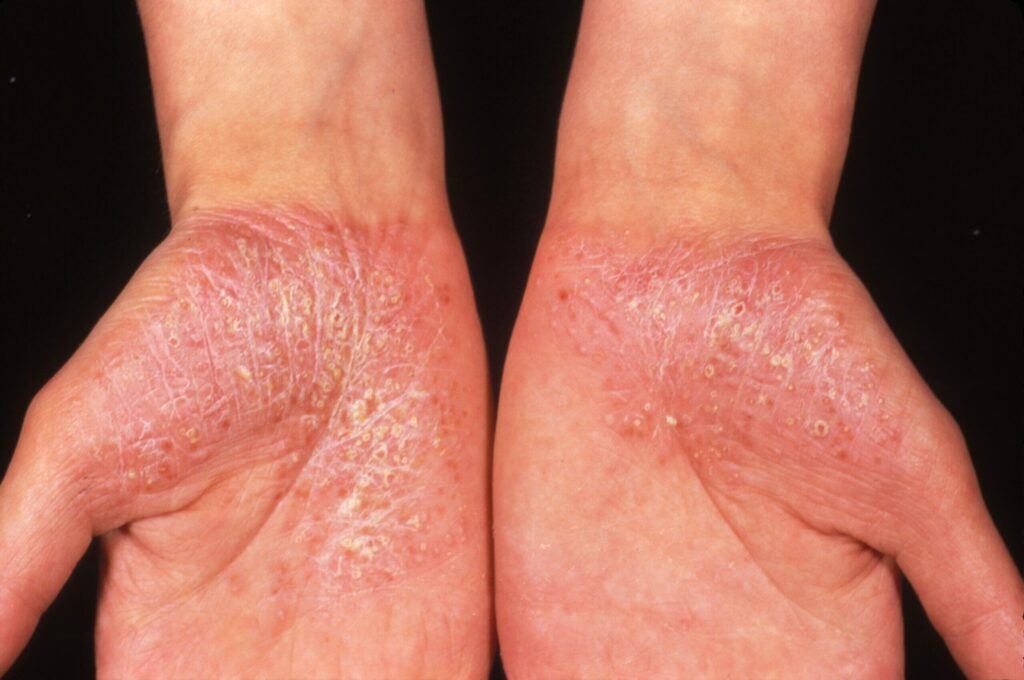
Pustular psoriasis is characterized by white pustules (blisters of noninfectious pus) surrounded by red skin. The pus consists of white blood cells. It is not an infection, nor is it contagious.
Symptoms
Pustular psoriasis is primarily seen in adults. It may be limited to certain areas of the body — for example, the hands and feet. Generalized pustular psoriasis also can cover most of the body. It tends to go in a cycle with reddening of the skin followed by pustules and scaling.
Triggers
- Internal medications
- Irritating topical agents
- Overexposure to UV light
- Pregnancy
- Systemic steroids
- Infections
- Emotional stress
- Sudden withdrawal of systemic medications or potent topical steroids
Types of Pustular Psoriasis
Von Zumbusch can appear abruptly on the skin. It is characterized by widespread areas of reddened skin, which become painful and tender. Within hours, the pustules appear. Over the next 24 to 48 hours, the pustules dry, leaving the skin with a glazed and smooth appearance. Children rarely develop Von Zumbusch pustular psoriasis, but when it does happen it is often the first psoriasis flare and may have a better outcome than in adults. This form can be life-threatening and requires immediate medical care. People with von Zumbusch pustular psoriasis often need to be hospitalized for rehydration and start topical and systemic treatment, which typically includes antibiotics. Von Zumbusch is associated with fever, chills, severe itching, dehydration, a rapid pulse rate, exhaustion, anemia, weight loss and muscle weakness.
Palmoplantar pustulosis (PPP) causes pustules on the palms of the hand and soles of the feet. It commonly affects the base of the thumb and the sides of the heels. Pustules initially appear in a studded pattern on top of red plaques of skin, but then turn brown, peel and become crusted. PPP is usually cyclical, with new crops of pustules followed by periods of low activity.
Acropustulosis (acrodermatitis continua of Hallopeau) is a rare type of psoriasis characterized by skin lesions on the ends of the fingers and sometimes on the toes. The eruption occasionally starts after an injury to the skin or infection. The lesions can be painful and disabling, and cause deformity of the nails. Occasionally bone changes occur in severe cases.
Treatment
It is not unusual for doctors to combine or rotate treatments for pustular psoriasis due to the potential side effects of systemic medications and phototherapy. More than one study indicates a combination of acitretin (brand name Soriatane) and methotrexate can send pustular psoriasis into rapid remission and eventual clear the skin; however these medications do not need to be combined to be effective for pustular psoriasis. Treatments for specific types of pustular psoriasis include: